

We all know ACE from cards and tennis.
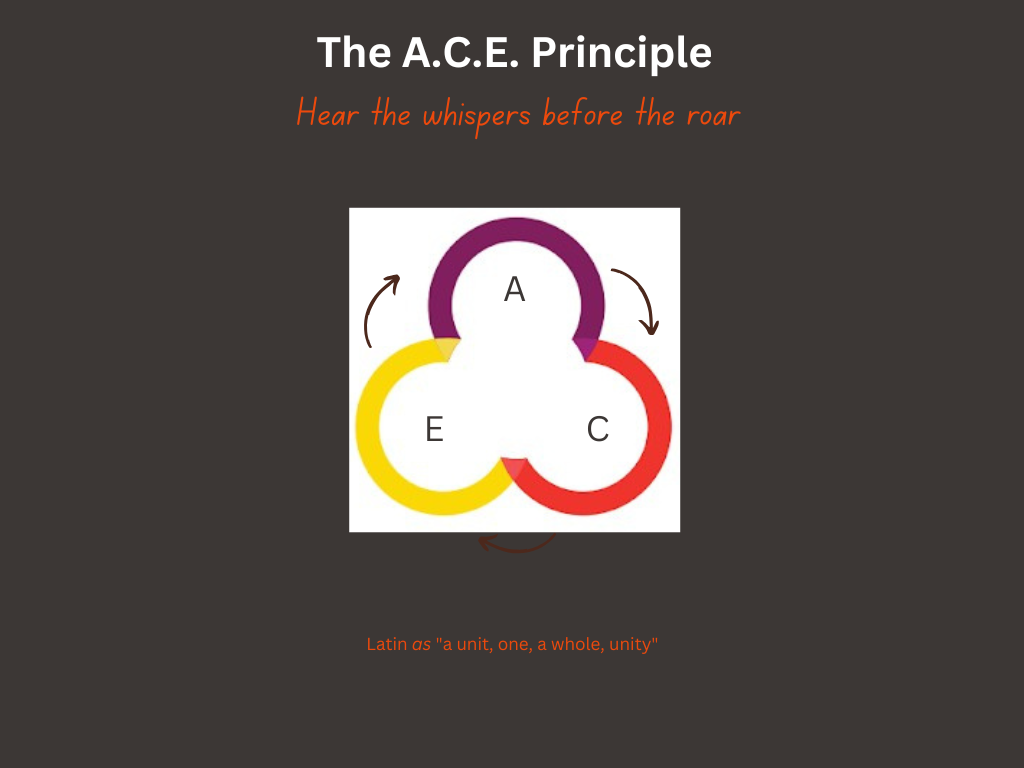
Did you know that in Latin, as, means “a unit” or “unity”?
At Manage the Conflict, we developed the A.C.E. Principle as a strategic method to manage conflicts in the workplace. Combined with behavioural profiling, the A.C.E. Principle empowers leaders and teams to address and resolve tensions more effectively.
Why the A.C.E. Principle?
Workplace conflict is common and costly. It’s more than just an HR issue; it’s a significant financial challenge for organisations of every size.
One of the biggest casualties of workplace conflict: Staff turnover.
Recruiting a new employee can cost the equivalent of six months’ salary, not to mention indirect expenses: recruitment agencies, onboarding, training, and lost productivity.
According to the CPP Global Human Capital Report (2008):
• $359 billion is lost annually due to unresolved conflict.
• 74% of HR leaders reported increased conflict due to reduced work-from-home policies.
• 72% of organisations lack a formal conflict management or resolution policy.
Let’s talk ACE.
What fuels workplace conflict?
We all carry our own cultural frameworks (hyperlink to Cultural Awareness): family, organisational, national, religious. But in professional settings, particularly in diverse environments, many feel they must leave their true selves at the door. This leads to inauthenticity and, inevitably, conflict.
At its core, conflict happens when one person has a need that isn’t being met by another. This can show up as:
- Differing communication styles (hyperlink to Profiling)
- Competing priorities
- Personal stress bleeding into work
- Ambiguous leadership
- Cultural misalignments
- Personality clashes
When conflict arises, emotions rise too. That’s not a bad thing: it’s human. Problems arise when we don’t regulate those emotions and react instead of respond.
Organisational impact of unresolved conflict (hyperlink to 7 best practice…)
Here’s how conflict plays out in an organisation:
- Low morale
- Absenteeism
- Increased resignations
- More mental health days
- Decreased productivity
- Poor customer service
- Stress leave
- Damaged reputation
Warning Signs
If your teams are unhappy, disengaged, or you’re losing your best people: you’ve got a problem. And that problem won’t resolve itself. Left unchecked, it can destroy productivity and drive-up costs through recruitment, training, and reputational loss.
How to Understand the Conflict in Your Organisation
1. Conduct Exit Interviews
Sounds simple, right? Yet in practice, many companies don’t do this, or don’t do it well. In my professional past, I have resigned from positions and have never had an exit interview.
Timing is everything. Hold interviews after emotions have settled, but not too late. And make it safe for employees to speak honestly.
2. Run an audit
Just like a financial audit, you can assess your organisation’s emotional and psychological landscape. Consider:
- Happiness audits
- Wellbeing audits
- Risk and conflict audits
These are conducted via anonymous surveys. But be warned: only run an audit if you’re ready to act on the results. Doing nothing damages trust even more.
3. Actively address what you find
If you know what’s hurting your people, start healing. Whether it’s through HR initiatives or external support, do something.
After the audit: What comes next?
Once you’ve identified the challenges, fix them. Ignoring the results undermines your leadership and breaks employee trust.
Ask yourself:
- What training is urgently needed?
- What’s our training budget?
- What outcomes are realistic, given how long the issues have been festering?
- Can we train everyone, or do we need to stagger sessions?
- Do we need in-person or virtual training?
- Will the training be a one-off or ongoing?
- Will it produce tangible, usable outcomes?
Choose the right training provider and set your teams up for success.
Want an audit?
What Happens After Training?
That depends on your goals and how your leadership chooses to monitor progress. The key is follow-through.
You’ll need:
- Internal champions
- Quarterly reviews
- Biannual staff surveys
- Regular, old-school engagement: walking around and talking to people
The power of human connection is real. Even a simple conversation builds trust.
According to Pollack Peacebuilding Systems (2008):
- 41% reported improved employee understanding
- 33% saw stronger relationships
- 21% noted higher team performance
- 18% experienced boosted motivation
In a Nutshell
A business is just a building until your people bring it to life. Your people are your greatest asset: your professional family.
Your job as a leader?
Hear the whispers before they become a roar.