
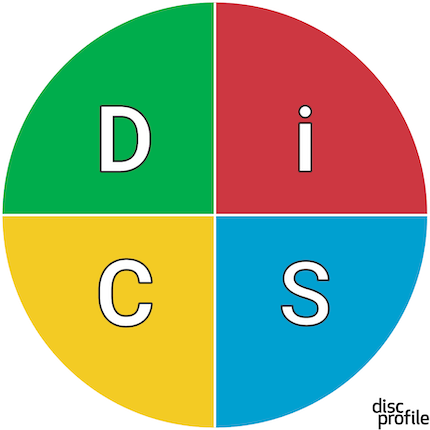
When I talk about behavioural profiling, some people say, “What, like NCIS and all the sociopaths?”
Well…no, not that kind of profiling! (Although, let’s be honest, I’ve come across a few profiles that might warrant a second look…)
Seriously though, let me walk you through what behavioural profiling really is, what it’s not, and why it matters: professionally and personally.

Table of Contents
Let’s get rid of a few myths…
What profiling is not
- Profiling is not a test
- It is not a measure of ability, skills, intelligence or attitudes.
- Profiling is not a good or bad based on high scores and low scores
- Profiling does not determine how good you are at a job, how experienced you are
Now that we understand what profiling is not, we can look at how it works, what it is and how it benefits you.
What is profiling and how is it done?
The 3 parts to profiling are:
- The questionnaire
- The debrief
- The report
Behavioural profiling helps us better understand how we communicate, engage, and operate in both workplace and social settings.
The process involves three parts:
1. The Questionnaire
Participants complete a questionnaire that takes around 35 minutes. You’ll be asked to rank four items in order of “most like” to “least like.” Once completed, the report is generated and sent to the facilitator for review.
2. The Debrief
This 90-minute session (online) is where the real value lies. We go over the highlights of your profile, especially your communication style, which is one of the most critical elements in both personal and professional relationships.
3. The Report
The full report ranges from 58 to 61 pages and offers a comprehensive breakdown of your behavioural style. It includes text, graphs, wheels and descriptors. It is not to be read cover to cover when you receive it, hence the debrief. It is a powerful tool for understanding yourself better and to be used as and when you need to consult it for clarification.
Do I Have to Reveal Any Personal Secrets?
Absolutely not. The questionnaire doesn’t ask for any secrets or personal disclosures.
Profiling is based on the idea that you are the expert on yourself. During the debrief, the facilitator may ask some clarifying questions, but they’re never sensitive or invasive. In most cases, you’ll already be aware of what’s shared, it’s just that the “why” behind your behaviour becomes clearer.
Many people experience “ah-ha” moments during this process as long-standing patterns or habits finally make sense.
What Behavioural Profiling Reveals
- Your unique communication style
- The tendencies and descriptors that define how you interact
- Practical insights for improving teamwork and relationships
- Your drivers
- You Emotional Intelligence (EQ) activity
When your profile includes driving forces, it reveals what energises or frustrates you, how you make decisions, and what fuels your motivation.
If emotional intelligence is included, it becomes the icing on the cake, giving you deeper insight into how you manage your emotions and relate to others effectively.
The combined power of DiSC, Driving Forces and Emotional Intelligence (EQ) profiling creates a deep, multi-dimensional understanding of how people behave, why they behave that way, and how they can best interact with others. Together, they move beyond surface-level assessments and unlock transformative insights for individuals, teams, and leaders.
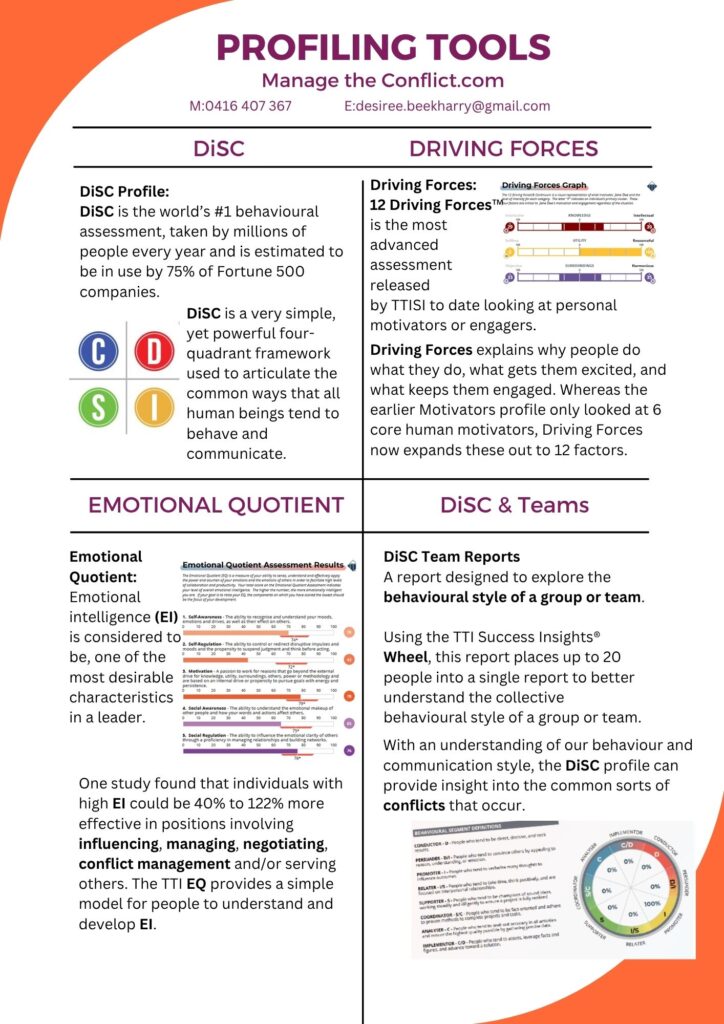
Team profiling and benefits
Team profiling is one of the most effective ways to strengthen how people work together. By understanding the behavioural styles, motivators and communication preferences within a team, leaders can reduce friction, build trust and create an environment where people feel seen, valued, and understood.
Profiling doesn’t label individuals: it equips teams with a shared language that makes collaboration smoother, feedback easier and conflict less personal. When a team understands itself, it performs better, communicates more clearly and manages challenges with greater emotional intelligence.
3 ways that employers can utilise profiling:
Recruitment purposes
Recruitment is more than a polished resume or a well-coached interview. Anyone can be taught how to impress on paper or in person.
Behavioural profiling digs deeper, helping employers identify the right fit—someone who doesn’t just meet the requirements but genuinely thrives in the role.
The benefits?
- Avoid the cost of re-hiring (often six months’ salary)
- Save on onboarding and training costs
- Retain valuable knowledge and team culture
- Build a more aligned, committed workforce
Interested in Team profiling – Get in Touch!
Team cohesion
For a team to perform well, it is essential that the members communicate well with one another and with other teams, departments etc. Profiling assists team members to better understand theirs and others’ communication preferences. This leads to high effectiveness, high productivity and success.
The benefits of team cohesion is that they have the tools and emotional intelligence to manage conflicts, communicate well with one another and to other areas of the business, thus demonstrating a positive culture and high productivity.
Of course, the best part of the profiling tools is that a team profile can be generated, showing where each member sits in terms of communication style, task approach and workplace interactions.
This of course and again leads to:
- Smoother collaboration
- Fewer misunderstandings
- Higher productivity
- Stronger team culture
Behavioural development
Self-awareness is the cornerstone of leadership.
Profiling helps individuals, whether employees or leaders, gain insight into their style, triggers and natural tendencies. That insight leads to more authentic influence and better decision-making.
A great manager knows that one size doesn’t fit all. With profiling, leaders can better motivate individuals by understanding what drives them. This leads to happier, more productive, and more effective teams.
Final Thoughts
Behavioural profiling is a practical, insightful and transformative tool not just for hiring decisions. It is for team harmony, leadership growth and personal development.
Whether you’re a CEO, HR leader, or team member, understanding behavioural styles can make a profound difference in how you connect, lead and succeed.